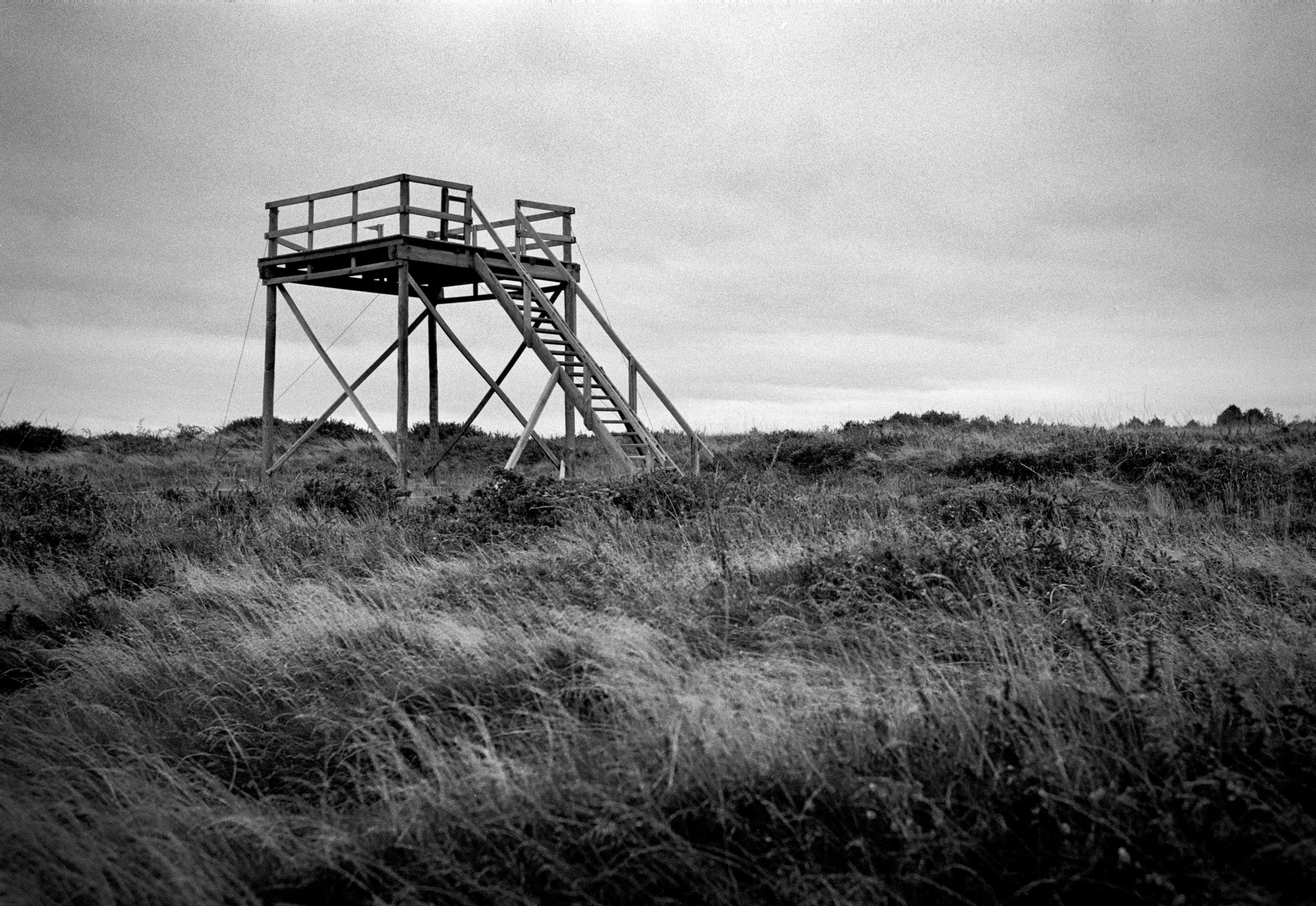
For many years I’ve been passionate about photography. Actually, ever since I was a child. As a kid, I constantly begged my parents for a camera, but they never bought me one. It wasn’t about the price of the camera itself; their real concern was all the expenses involved in owning one, especially film developing and printing costs. Taking photos was considered a luxury, something to do sparingly and thoughtfully. Obviously, the concept of moderation wasn’t something my childhood self understood very well, which is probably why my parents never bought me the camera I desperately wanted.
But then, by chance, my father received a promotional camera from “Lois” and gave it to me. Finally, I had a camera I could use freely, which was quite a revelation, although the results were rather disappointing. The camera was of poor quality, and most of my pictures turned out dark or blurry. Still, despite the disappointing results, it was a very satisfying first encounter with photography.
Years later, while buying computer components at a store called PC Box, I noticed one of the first digital cameras available, a Benq DC1500. It had a good price, and I couldn’t resist buying it. The quality was pretty bad, and the camera itself wasn’t impressive. However, I could take as many pictures as I wanted, and in fact, I still have a folder on my computer filled with images from that era. Today, these photos offer me a small but invaluable window into the past.
My next two cameras were also from Benq, and these were much better, real cameras, at last. The first had excellent image quality but was unfortunately stolen when I left it unattended at a café. Curiously, the second wasn’t as good, but shortly afterward I got my first DSLR, so it wasn’t an issue.
That DSLR, a Canon EOS 400D, marked a huge leap forward compared to everything I’d previously used. It had full manual controls, depth of field, shutter speed, ISO settings, everything. This camera was instrumental in teaching me the fundamental concepts of photography. I used it on several trips, and it never let me down. The only drawback was its size and weight, as I missed the portability I’d enjoyed with my earlier Benq cameras.
That’s why, a few years later, when I saw the Fuji X100, I immediately fell in love and bought one. Back then, it wasn’t as popular as it is today; in fact, it was considered a niche camera owned by very few people. The image quality was incredible, the size perfect, the viewfinder extraordinary, and the macro capability incredibly versatile. It was simply the perfect camera.
But later on, I became involved in a music project and needed to record videos. The Fuji X100T didn’t offer great video quality, so I replaced it with a Fuji X-T3. Even though it was an excellent camera, I never felt the same passion for it, and when the project ended, the camera ended up forgotten in a drawer. My passion for photography gradually faded after that.
Eventually, I sold it because it wasn’t being used, and spent several years taking pictures with my smartphone, whose cameras improved steadily. Smartphones are undoubtedly practical, but they make photography feel secondary and ephemeral. You end up taking countless photos that sit forgotten on your hard drive. Those years using my smartphone were the most uninspired photographic period of my life, and I eventually focused on other things.
Then, a few months ago, specifically last October, I considered buying a Fuji X100 again. I missed the passion for photography, the joy that camera had brought me, and the wonderful experiences I’d had with it. But surprisingly, I found it nearly impossible to get one. An alternative, albeit more expensive, was the Leica Q, so I began to seriously consider it. The Leica Q3 had just come out, and it seemed like the ideal choice.
Technically, it was perfect, offering everything I could ask for in a camera and more, so I ordered one. But despite its perfection and the undeniable step up from the X100, something about it still didn’t quite feel right. Then I saw the reissued Leica M6, an analog camera completely different from the Leica Q3 I’d ordered. The idea of shooting analog captivated me instantly. This was exactly what I wanted, a compact, classic camera with manual controls, a demanding process, and a challenge that truly lets you enjoy photography in all its dimensions.
Without hesitation, I canceled my Leica Q3 order and bought the Leica M6 instead, a 180-degree turn that left the shopkeepers somewhat puzzled. I’ve had it for a few months now, and honestly, I’ve never dedicated myself to photography as much as I have during this period. I’ve taken numerous road trips, discovering places I’d never have found without the M6. I’ve learned the process of film development, scanning, and black-and-white editing. It has been one of the most rewarding experiences of my photographic life, even after all these years. Without a doubt, it’s the camera I’ve enjoyed the most.
In fact, I’ve become so deeply involved in analog photography that I’ve felt the need to share this passion with others. And that’s why today I’m starting this project, going beyond just posting a few photos on Instagram. I want to share my experiences, lessons learned, discoveries, and my passion for writing, even though I’m no literary genius, I truly enjoy it. My goal is to breathe life into this small online space I’ve created, and hopefully inspire others. If someone discovers a new passion for photography through my blog posts, that alone will make it worthwhile.
I warmly welcome you to my new space and sincerely thank you for visiting. Thanks for sharing this passion with me!
