I’m one of those atypical people who don’t enjoy getting a brand-new car. I admit that I like visiting the dealership, looking at different models, and comparing features. But when the moment of truth arrives, when it’s time to take the new car and hit the road, I find it especially overwhelming and I don’t enjoy it at all. In fact, it takes me months to feel comfortable again, to enjoy driving, to relax and stop thinking about the car as an object so I can focus on driving as an experience. It’s a process that, if I could avoid, I gladly would.
I know the experience of something new can be exciting and motivating, but not for me. And the same thing happens with cameras. I like learning about new releases, looking at their features, comparing models, and even considering the possibility of buying one, but on the day I actually use it for the first time I feel lost and disoriented. There are no automatisms, and every action requires conscious thought. In the end I don’t enjoy the experience, the process dissolves into the purely technical, and the results are rarely satisfying. Just like with a car, I need a certain amount of practice before I feel comfortable and reach the level of competence that allows me to fully enjoy the process without distractions.
That’s precisely why I think today’s photograph has some merit. Determined to switch from the analog world to the digital one, I spent some time considering several options. It was a step I wasn’t entirely convinced about, and in my uncertainty I decided to be cautious and buy a camera that didn’t require a major investment so that, if regret appeared, I could easily reverse the decision without taking too much of a financial hit. Everything was very reasonable… until I saw an offer for a Leica M11-D that I couldn’t turn down. It’s the digital camera closest to the analog world, and after all these years shooting analog Leicas, the change felt inevitable. Once again, emotion won over reason.
As expected, the first contact was somewhat disconcerting, but to my surprise, much less so than I had imagined. Once the basic setup was done, the camera handled almost exactly like a Leica M6: aperture, exposure, focus, and default ISO. Those four values define the entire experience. But unlike the M6, after taking a photo there’s no need to advance the film, and more than once my thumb instinctively tried to move the film-advance lever.
Once I got past that unconscious impulse, my second mental barrier was shot restraint. With film, every frame matters, so you shouldn’t waste it by ensuring a shot or repeating compositions. But with digital you can afford that, and I’d even say it’s advisable, so I had to deal with forcing myself to shoot more and overcome that analog austerity.
The last major change compared to my previous cameras is the ability to choose the ISO value. Although I began with the automatic setting, the exposure readings were confusing, so I eventually decided to choose ISO manually, and I must say that the freedom of adjusting this parameter whenever I want, without changing a roll of film, is absolutely liberating. Facing a particularly dark scene and being able to set ISO 800 still brings a smile to my face. Coming from such a restrictive world as analog photography clearly has its rewards.
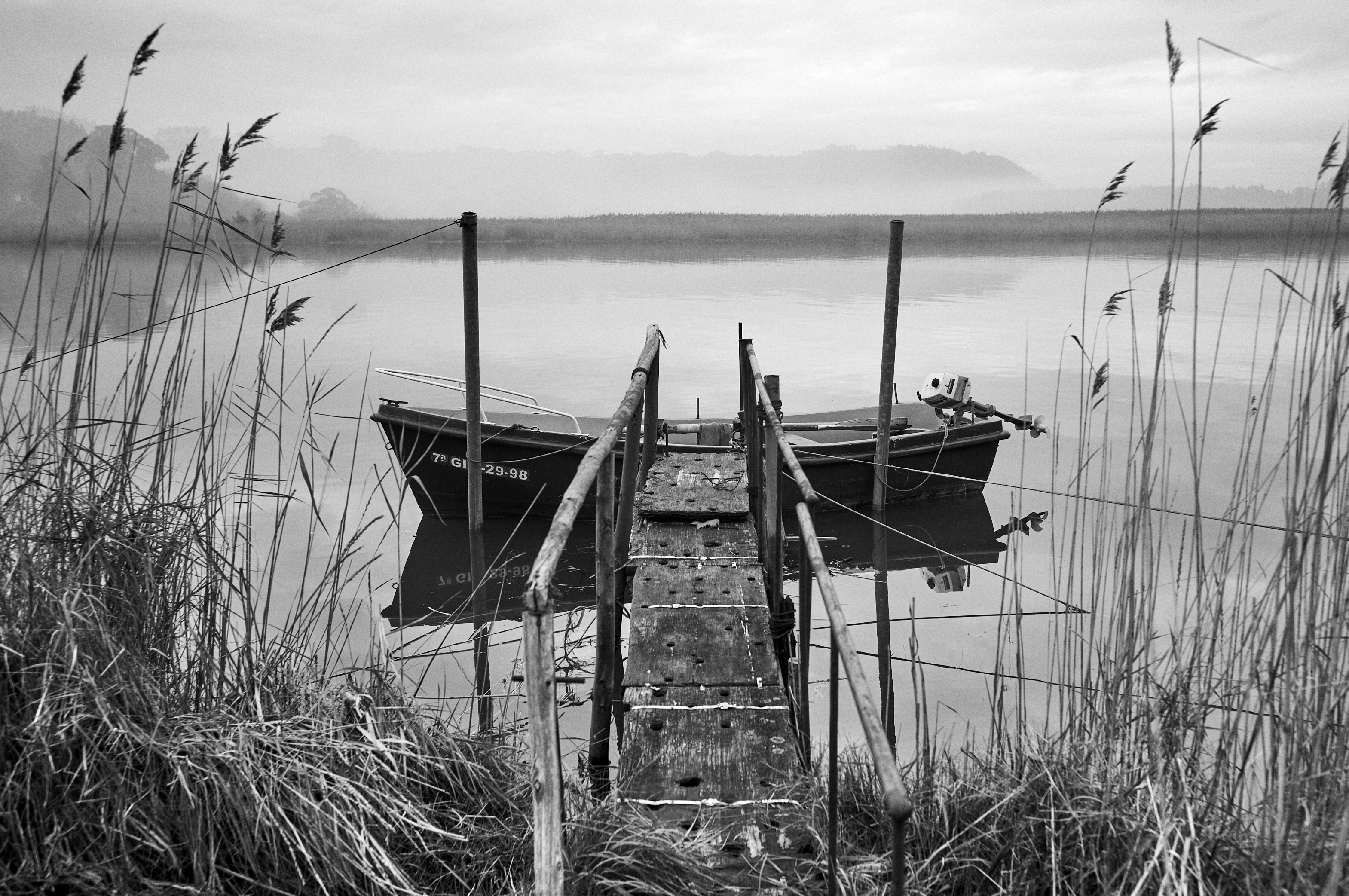
And thanks to this smooth transition made possible by the Leica M11-D, my visit to the small pier at Soto del Barco, in Asturias, was especially pleasant. From the kindness of the fisherman I met there, who encouraged me to take as many photos as I wished, to the fog that suited the place so well, and the perfectly calm weather that invited slow photography, reflection, and simply enjoying the moment. The photographs emerged naturally, and the initial insecurity slowly turned into the photographic experience I enjoy so much.
The little M11-D reminded me of so many sessions with my analog cameras that, at the risk of making a premature judgment, I think I’ve chosen well. Only time will tell whether this digital phase will stay with me for many years or whether nostalgia for the analog process will pull me back to film. But what’s clear is that the initial experience couldn’t have been more positive, and that makes me trust that this path has a long future ahead. I hope the promise holds.
Update:
After a few weeks immersed in the digital world, I have to admit that the experience has not been what I had expected. While the M11D is an absolute delight, and there is nothing simpler or closer to the analog experience in the digital realm, I could not shake a certain feeling of dissatisfaction, for lack of a better word, and it was not until the moment I decided to return to the analog world that this feeling finally disappeared.
I recognize that the digital world has many advantages. In fact, objectively speaking, it is the only format that truly makes sense today. But logic and sense, in something as passionate as photography, carry far less weight than they do in other areas of our lives.
I love analog photography for its character, its grain, its imprecision and imperfections, its lack of sharpness, its craftsmanship, its limits, its timing, the care and patience it demands. All these “disadvantages” give soul and substance to the photographic experience and create a unique result that, although it can be simulated through filters and layers in editing software, is still only an imitation of the real process. And no matter how much we try, the imitation never has the same glow as the original object.
I am moved by the analog passion, its processes, its results, and I fear that letting go of them would inevitably lead me to abandon this hobby that has brought me so much joy, something I cannot allow myself. So, despite all the excitement I had invested in this new path, I find that the bravest and most sensible thing is to take a step back and recover the essence that nourishes my passion. Of course, this is a personal decision and evaluation that is by no means the only or the most valid one. If you enjoy digital photography and can take advantage of all its benefits, develop that medium as much as you can and use it to live the photographic experience, because in the end that is the only thing that matters and what truly moves us. The medium matters very little, since what is truly important, in the end, is the purpose.
