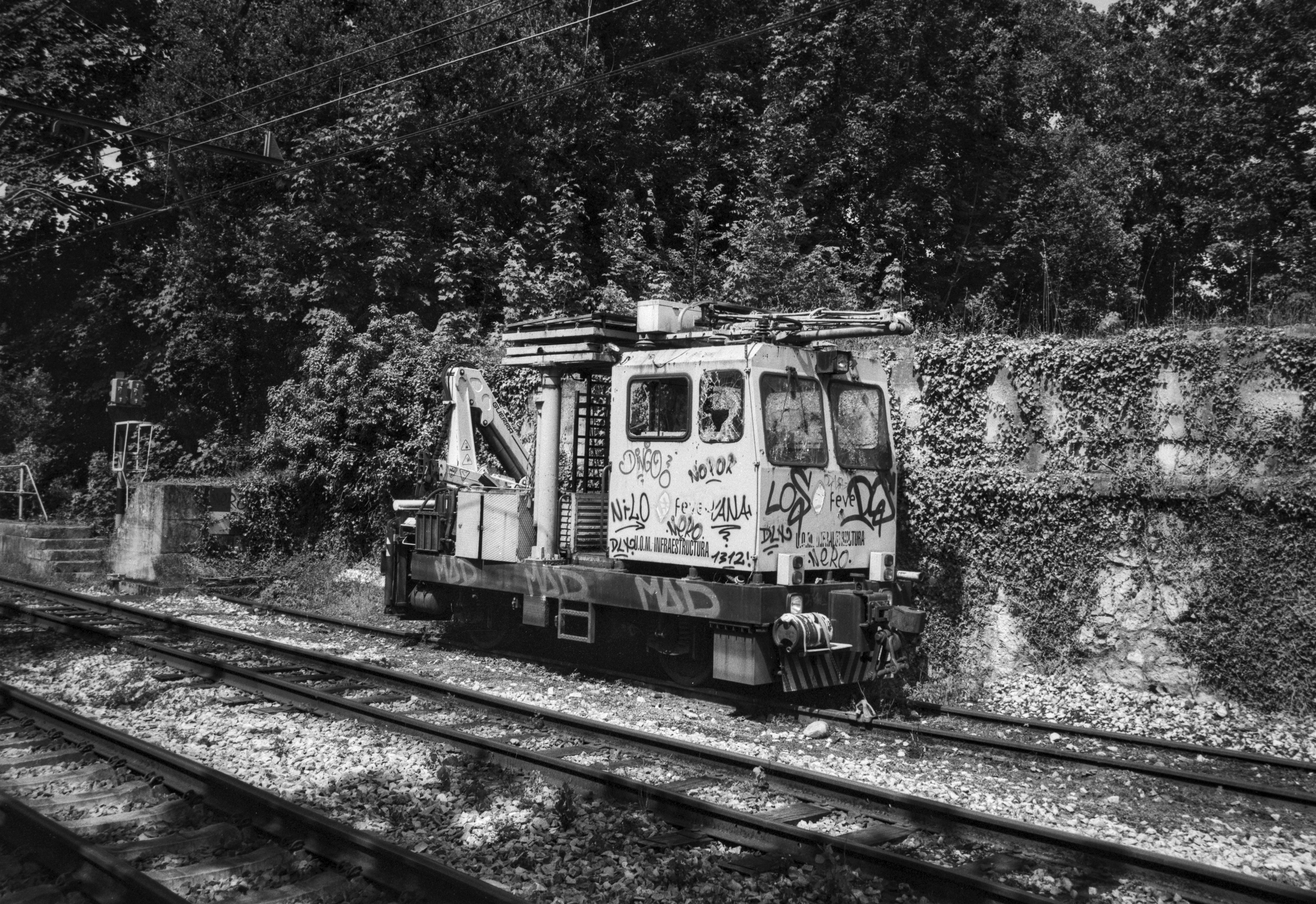
The different sensations that train stations evoke in me are simply indescribable. It is almost like trying to describe a color, because in that case you always end up referring to objects that display it or to scenes where it predominates, but you cannot truly describe the color itself. The same happens with the feelings that surround me as I walk through the spaces of these places of transit. I can associate the impressions they create with certain lived experiences, with other memories or with other situations, but it is very difficult to describe the exact nature of each of those sensations. The only thing I can really do is pick up my camera, try to capture the scene that best reflects those feelings, turn it into an image that removes distractions and focuses on the memory, the essence, the most subjective part, and with a bit of luck awaken those same feelings in the viewer. It is not an easy task, but analog black and white photography helps a great deal, especially because of its ability to transport the observer into a recreation that centers more on the memory and emotion of a place than on reality itself.
This scene, featuring a small abandoned railcar, was taken at the train station in Trubia, a small town in Asturias known especially for its arms factory, one of the most important and oldest in Spain. What caught my attention as I passed through the area was not the train station or the factory, but a group of ruined buildings that, after some research, I discovered are known as “Los pabellones del Vasco”. They were home to the officers and higher ranking staff who worked at the arms factory. They are imposing buildings that now lie in a lamentable state of neglect. And although I stopped there specifically to photograph them, the image that ultimately stole my heart was this small railcar that I found by chance while walking through the railway station. Despite the grandeur of those villas, train stations and railway machines always hold a special place in my heart, and since one is easily swayed, they always end up taking center stage. These are the photographer’s small biases that, beyond personal quirks and obsessions, gradually shape the distinctive character of each of us.
